Refractive Surgery and Sports: What to Discuss with the Specialist
Dr. Guillermo Enríquez TostadoNovember 12, 20269 min read

In this article
Refractive surgery may reduce dependence on glasses or contact lenses, but playing sports changes the questions worth bringing to your consultation. The type of activity, the possibility of being hit in the face, dust, water, wind, night vision, and when you can return to training or competitions may influence the assessment and choice of procedure. There is no single ideal technique for every athlete.
Why does sports participation matter when considering refractive surgery?
The refractive surgery changes the shape of the cornea or uses an implant to correct refractive errors such as nearsightedness, farsightedness, or astigmatism. The National Eye Institute explains that LASIK is the best-known procedure, but alternatives such as PRK, LASEK, and phakic intraocular lenses are also available.
For an athlete, it is not enough to ask whether they want to see without glasses. It is also important to describe how they train and compete. Running, swimming, mountain biking, tennis, soccer, martial arts, boxing, and other activities where a ball, elbow, branch, or fall could directly hit the eye all pose different considerations.
Physical activity can also expose the eyes to sweat, dust, wind, water, chlorine, changes in lighting, and dry environments. The consensus of the International Olympic Committee on sport-related ophthalmology notes that athletes may be more exposed to eye injuries and may experience blurred vision, double vision, or light sensitivity that affects their performance.
Questions about sports to discuss
During your assessment, it’s helpful to provide specific information, for example:
- •What sport do you practice, and how often?
- •Is it recreational, competitive, or professional?
- •Does it involve physical contact, impacts to the face, falls, or projectiles?
- •Do you train outdoors or in dusty, windy, watery, or chlorinated environments?
- •Do you need to drive or compete at night?
- •Do you wear contact lenses, sports glasses, or eye protection?
- •Do you have an upcoming competition that limits the time available for recovery?
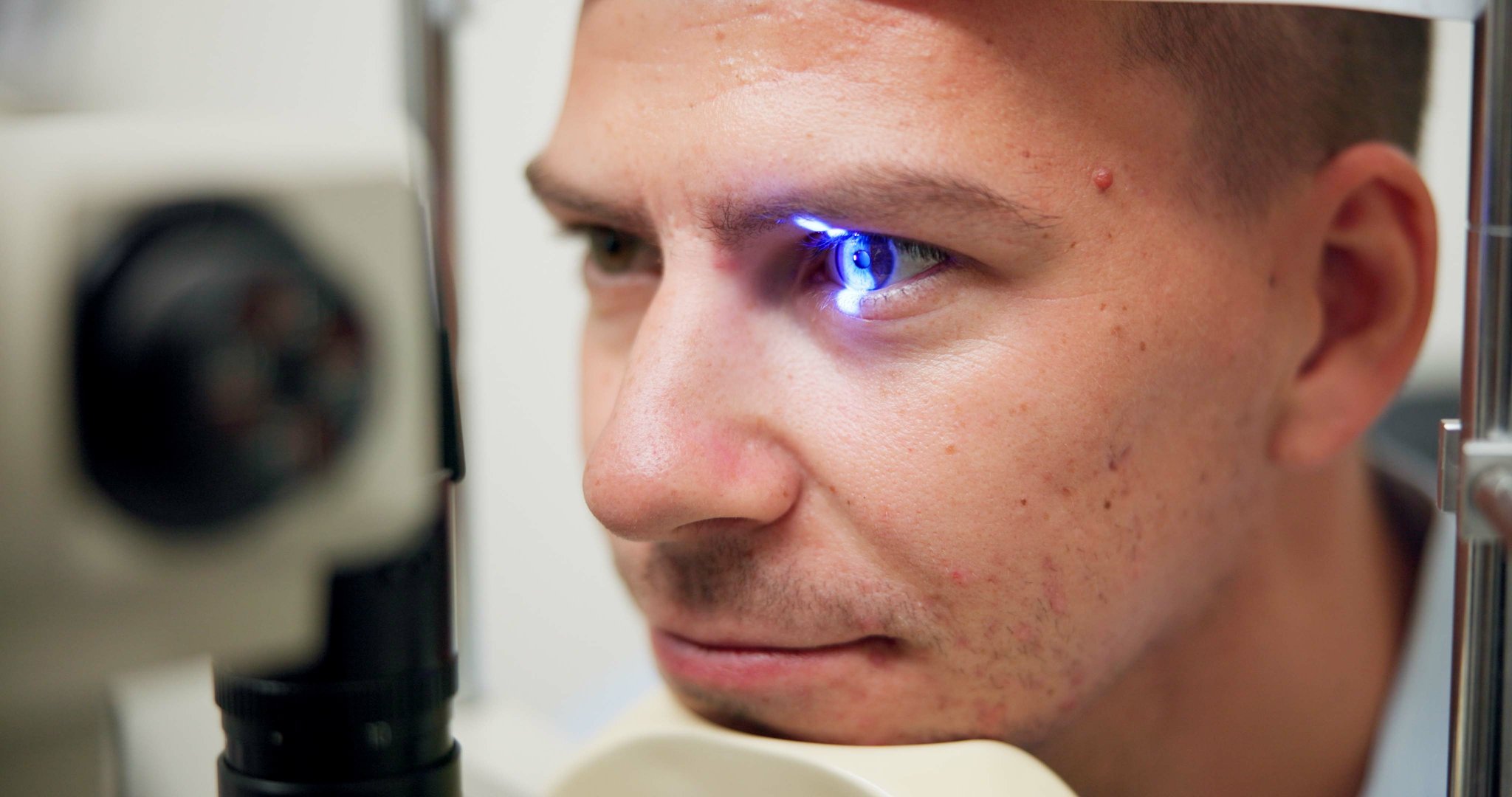
The U.S. Food and Drug Administration (FDA) identifies active participation in contact sports—such as boxing, wrestling, or martial arts—as a factor to discuss before considering LASIK. This does not automatically mean that a person cannot have refractive surgery; rather, the risk of trauma and the characteristics of each procedure should be assessed individually.
Choosing a procedure: It’s not a decision based only on your prescription
LASIK creates a corneal flap before applying the laser. PRK reshapes the cornea after removing the surface layer, without creating that flap. Small-incision procedures and alternatives involving intraocular lenses are also available in selected cases. Each option has different indications, limitations, possible side effects, and recovery times.
The assessment may consider prescription stability, corneal thickness and shape, dry eye, pupil size, a history of eye injuries, and visual expectations. The American Academy of Ophthalmology EyeWiki notes that occupation and recreational activities are part of the history to review; for people at significant risk of corneal trauma, a flapless technique may be considered, although the decision should not be based solely on the sport.
- •Hits to the face or eyes: What to discuss with the specialist: Whether the activity involves frequent contact, falls, or projectiles, and how this may affect the risk assessment.
- •Visual recovery: What to discuss with the specialist: When functional vision might be expected and when it might stabilize; do not assume a set timeline.
- •Water, sweat, and dust: What to discuss with the specialist: When it may be reasonable to resume swimming, water activities, or training in contaminated environments.
- •Night vision: What to discuss with the specialist: The possibility of dryness, halos, glare, or fluctuations that could matter when competing or driving.
- •Eye protection: What to discuss with the specialist: What protection your sport requires and whether you should continue using it after surgery.
Returning to exercise: it depends on the procedure and your recovery
Returning to exercise should not be confused with when a person starts seeing better. The cornea may still be healing, and vision can fluctuate during the first few weeks or months. The FDA’s informational document on LASIK notes that after LASIK, some people may begin non-contact activities within one to three days, depending on the activity, how they feel, and their doctor’s instructions. For strenuous or contact sports, it advises waiting at least four weeks; it also recommends avoiding swimming, hot tubs, or whirlpool baths for a period that may be as long as one or two months.
These time frames are general references for LASIK and do not replace individualized instructions. The time frame may vary depending on the technique used, the condition of the ocular surface, healing progress, level of contact, and the rules of the sport. An upcoming competition should not be the only reason to speed up a return.
Even after training resumes, eye injuries remain possible. Appropriate protection—for example, sports glasses designed for the activity—may be important before and after refractive surgery. No procedure eliminates the risk of sports-related injuries.
Benefits, limitations, and risks to discuss
A possible benefit is reduced dependence on eyeglasses or contact lenses during training and competitions. However, surgery does not guarantee complete freedom from vision correction. Some people may still need glasses for certain activities or experience changes in their vision over time.
The FDA material on LASIK risks mentions that dryness, glare, halos, double vision, reduced visual quality in low-contrast conditions, undercorrection or overcorrection, and, in some cases, loss of lines of vision that cannot be corrected with glasses, contact lenses, or another surgery may occur. The National Eye Institute also describes risks such as infection, healing problems, and vision that is less clear than before.
In addition, LASIK does not correct presbyopia. As a result, an adult may need reading glasses at some point, even if they have good distance vision after surgery. Expectations should take into account age, visual demands, sport, and activities outside of training.
Helpful questions for your consultation
- •Does my sport increase the risk of an eye injury with any technique?
- •What alternatives are reasonable in my case, and why?
- •What vision changes could affect my performance, especially at night?
- •What would be the medical criteria for returning to training, swimming, or competition?
- •What eye protection should I use afterward?
- •What signs would mean I should contact the office before my follow-up appointment?
- •Is it possible that I will still need glasses for some activities?
Frequently asked questions
Is refractive surgery recommended for everyone who plays sports?
No. Whether it is appropriate depends on eye health, prescription stability, corneal anatomy, expectations, and the type of sport. Participating in a contact sport does not by itself mean surgery is prohibited, but it does make discussing the risk of impacts and the choice of procedure especially important.
Will I be able to return to training immediately after surgery?
You should not assume so. Your return depends on the technique, intensity, contact, exposure to water or dust, and the specialist’s examination. General recommendations for LASIK include temporary restrictions on non-contact sports, contact sports, and swimming, but your individual plan may be different.
Does surgery eliminate the need for eye protection?
No. Refractive surgery aims to correct focusing, but it does not protect against balls, impacts, branches, dust, water, or trauma. The protection recommended for each sport remains important.
What to bring to your consultation
Refractive surgery for athletes should be approached as a personalized decision. Before choosing a technique, it is important to review your prescription, corneal health, visual demands, exposure to contact or impacts, and the time available for supervised recovery. An ophthalmology consultation can help compare benefits, limitations, and risks without assuming that one option is universally superior.
If you’re considering reducing your dependence on glasses, you can request an assessment to discuss your sports activities and expectations: ophthalmology appointment.
References
- •
- •
- •
- •
- •
- •
This content is for informational purposes and does not replace a medical consultation or constitute a diagnosis.
This information is for guidance only and does not replace a medical consultation, diagnosis, or treatment. Each case is assessed in person.


