Presbyopia Options: Glasses, Contacts, and Surgery
Dr. Guillermo Enríquez TostadoNovember 4, 202610 min read

In this article
Summary: Presbyopia, commonly known as age-related difficulty seeing up close, is a progressive difficulty focusing on nearby objects that usually appears after age 40 or 45. Non-surgical options include eyeglasses and contact lenses, as well as ophthalmic medications and various procedures in selected cases. The decision depends on the refractive error, eye health, daily activities, tolerance for possible visual effects, and each person’s expectations; age alone does not determine whether an implant or surgery is appropriate.
What is presbyopia, and how is it confirmed?
Presbyopia occurs because the natural lens, a structure inside the eye, loses flexibility over time and becomes less able to change focus. It may appear as difficulty reading small print, needing to hold a phone or books farther away, eye fatigue, and headaches. The National Eye Institute notes that it usually occurs after age 45 and may coexist with nearsightedness, farsightedness, or astigmatism.
The evaluation should include a review of the eyeglass prescription and the overall health of the eyes. Do not assume that all blurry near vision is caused solely by presbyopia: sudden changes, double vision, pain, flashes, vision loss, or a marked difference between the eyes require medical assessment.
Nonsurgical options for presbyopia
Reading glasses
Single-vision reading glasses are a simple, reversible option. They may be prescribed after an assessment or, in some cases, purchased without a prescription. These over-the-counter glasses may be useful when both eyes have similar needs and there are no other vision problems, but they do not replace an eye exam if you have new symptoms, astigmatism, persistent discomfort, or a history of eye disease.

Their main advantage is that they allow you to focus up close without changing the eye, and they can be changed as your prescription changes. The limitation is that they usually need to be put on for reading or other close-up activities. They do not, by themselves, correct distance vision or other eye diseases.
Bifocal, trifocal, and progressive lenses
These designs combine different focusing zones for seeing at a distance, at intermediate range, and up close. They can be practical for people who alternate between walking, using a computer, and reading because they reduce the need to switch frames.
Adapting to them may take time. Some people notice narrower areas of clear vision, changes in sharpness when moving their head, or initial difficulty using stairs. The design should be chosen based on usual activities, prescription, and comfort—not age alone.
Contact lenses
Multifocal contact lenses distribute light through different optical zones to try to provide vision at multiple distances. Another option is monovision, in which one eye is adapted mainly for distance and the other for near vision; mini-monovision options, which involve a smaller difference between the two eyes, are also available.
A systematic review available on PubMed on contact lenses for presbyopia found clinical evidence of their usefulness, although it also noted methodological limitations and small sample sizes in some studies. In practice, halos, reduced contrast, fluctuations in sharpness, or difficulty adapting may occur. Monovision can affect depth perception or performance on certain tasks, so it is often important to try it before making a final decision.
Contact lenses also require hygiene, follow-up, and individual fitting. Dry eye, difficulty handling them, or certain ocular surface diseases may make them less comfortable or less suitable.
Ophthalmic medications: an option that requires an assessment
In the United States, the Food and Drug Administration (FDA) approved 2021 pilocarpine 1.25% ophthalmic solution to treat presbyopia in adults, according to its approval document. This type of medication constricts the pupil and may increase depth of focus, with the goal of temporarily improving near vision.
It is not a universal solution and does not replace an assessment. The prescribing information from the FDA includes warnings related to blurred vision, difficulty driving if vision is unclear, and the risk of retinal detachment in certain circumstances. Headaches or visual disturbances may also occur. The indication, contraindications, and follow-up should be determined with a professional; do not use someone else’s drops, drops bought without verifying their source, or drops intended for another condition.
Corneal procedures and lens surgery
Corneal procedures
Some laser techniques change the shape of the cornea to create a monovision strategy or expand the range of focus. Other corneal procedures to improve near and intermediate vision have also been studied. However, they may reduce contrast, cause halos, or create differences between the eyes. A review of corneal techniques published on PubMed emphasizes that selection depends on visual needs, eye characteristics, surgical history, and expectations.
Prescription stability, corneal shape and thickness, dry eye, and other diseases are relevant considerations before surgery is considered. A corneal procedure does not necessarily stop natural age-related changes, and some people may still need eyeglasses for certain tasks.
Intraocular lenses
During cataract surgery, the cloudy natural lens is removed and an intraocular lens is placed. There are monofocal, multifocal, and extended-depth-of-focus lenses. Some options may reduce dependence on eyeglasses at certain distances, but they do not exactly restore the eye’s natural ability to change focus.
The evidence summarized in a review of systematic reviews (Daka Q et al., Br J Ophthalmol 2025) on intraocular lenses after cataract surgery indicates that multifocal and extended-depth-of-focus lenses may improve spectacle independence compared with monofocal lenses, although multifocal lenses are associated with a higher frequency of halos and glare. A more recent narrative review also notes that fully restoring natural focusing has not yet been achieved. Therefore, surgery should be considered on an individual basis, taking into account expected visual quality and not just the desire to stop wearing glasses.
- •Reading glasses — Potential advantages: Reversible, simple, and nonsurgical · Limitations or considerations: Used mainly for near vision and may need to be updated
- •Progressive or multifocal glasses — Potential advantages: Provide vision at multiple distances with a single pair of glasses · Limitations or considerations: Adaptation varies, and there may be areas of distortion or a smaller usable field of view
- •Multifocal contact lenses or monovision — Potential advantages: Reduce the use of glasses during some activities · Limitations or considerations: Require adaptation, hygiene, and tolerance of possible changes in contrast
- •Specific eye drops — Potential advantages: A temporary, nonsurgical option for selected adults · Limitations or considerations: Require assessment, come with warnings, and are not suitable for everyone
- •Corneal procedures — Potential advantages: May change the range of focus · Limitations or considerations: Are permanent or invasive and may involve trade-offs in contrast or adaptation
- •Intraocular lenses — Potential advantages: May reduce dependence on glasses after natural lens surgery · Limitations or considerations: Involve surgery and may cause halos, glare, or the need for glasses for some tasks
How do you choose among the alternatives?
The decision should be based on a complete ophthalmologic assessment. It is important to check the eyeglass prescription for both eyes, the cornea, tear film, natural lens, retina, and other factors that may affect visual quality. It is also helpful to discuss activities such as driving at night, working at a computer, reading for long periods, or playing sports.
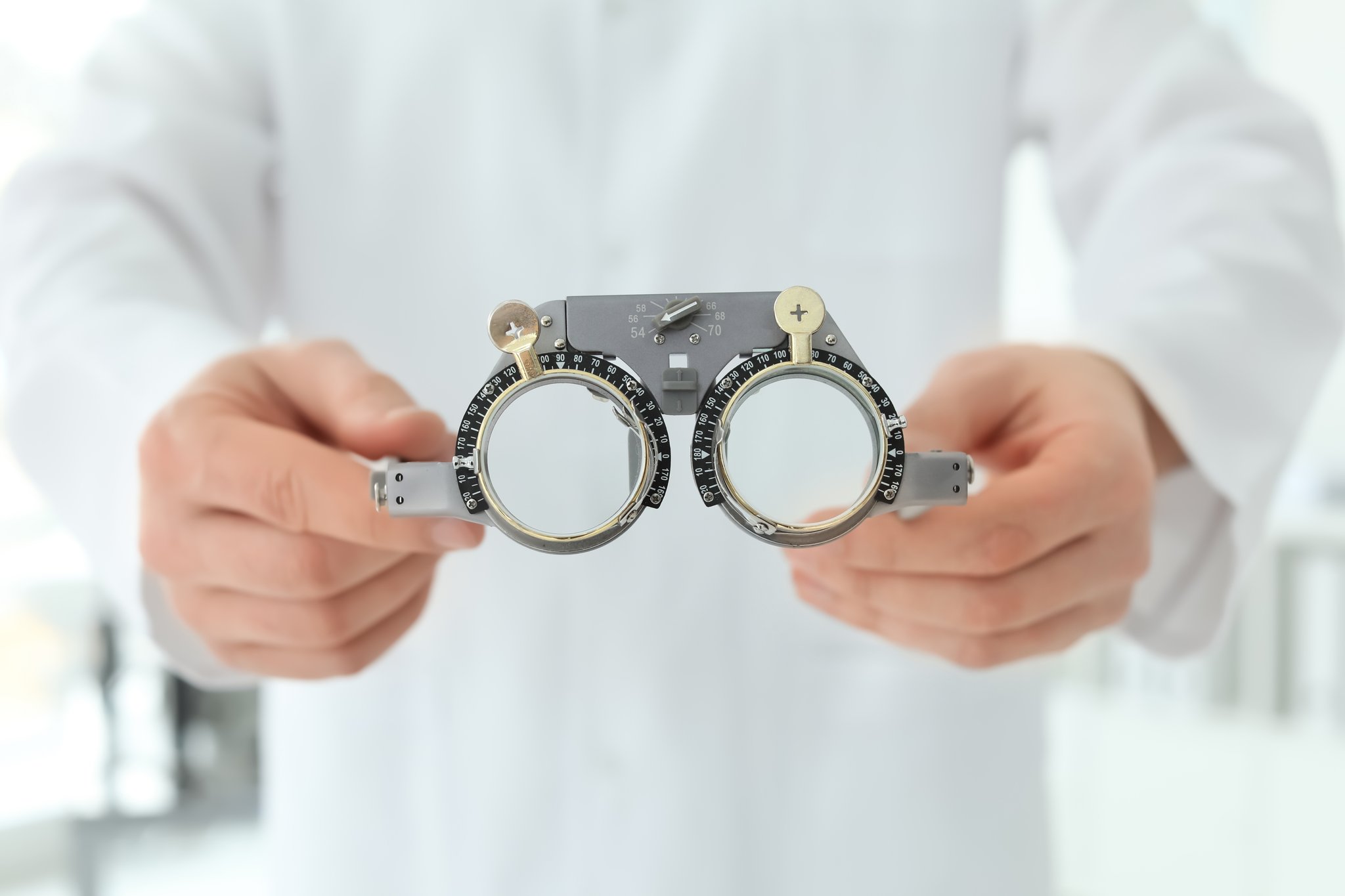
Surgery should not be recommended solely because a person has reached a certain age. Nor is it reasonable to promise complete independence from glasses or vision identical to that of youth. In some cases, continuing to wear glasses offers the best balance of benefit, reversibility, and risk. In others, a surgical option may be explored after its potential benefits and trade-offs have been clearly explained.
Frequently asked questions
Can presbyopia be corrected permanently with glasses?
Glasses correct vision while they are being worn, but they do not stop the natural aging process of the natural lens. The eyeglass prescription may change over time and should be checked if discomfort or blurry vision returns.
Do multifocal contact lenses work the same way as progressive glasses?
Not necessarily. Both aim to provide vision at different distances, but they use different optical systems. Sharpness, contrast, and adaptation vary from person to person; a supervised trial can help assess tolerance.
Is it a good idea to have an intraocular lens implanted just because you have presbyopia?
Not automatically. Intraocular implants are considered as part of an individual assessment, especially when there is an indication related to the natural lens, such as cataracts, or when a specific refractive surgery is being considered. Age alone does not determine candidacy.
Conclusion
Treatments for presbyopia range from simple glasses to contact lenses, eye medications, and surgical procedures. Each option offers different benefits and limitations. An assessment can confirm the cause of symptoms and compare options based on eye health, daily activities, and how important independence from glasses is to each person.
If you would like to learn which options might be considered in your case, you can request an ophthalmologic assessment through the consultation schedule. The choice should be made after a clinical evaluation and an informed discussion of expectations, risks, and alternatives.
References
- •National Eye Institute. Presbyopia. Last updated: 4 December 2024.
- •
- •
- •
- •Treatments for Presbyopia. PubMed, narrative review with literature through February 2025.
- •FDA. NDA 214028 approval letter, ophthalmic pilocarpine 1.25 %. Approval: 28 October 2021.
- •
This content is for informational purposes and does not replace a medical consultation or constitute a diagnosis.
This information is for guidance only and does not replace a medical consultation, diagnosis, or treatment. Each case is assessed in person.


