Thin Cornea: Questions to Ask About Your Options
Dr. Guillermo Enríquez TostadoNovember 19, 20269 min read

In this article
Having a thin cornea does not, by itself, determine whether a person can undergo refractive surgery. The assessment should take into account corneal thickness and shape, eyeglass prescription, the amount of tissue that would be removed, the tissue that would remain after the procedure, and other findings in the eye. If one technique is not appropriate, alternatives may be considered, but the fact that another option exists in theory does not mean it is necessarily viable for every patient.
What does it mean to have a thin cornea?
The cornea is the clear layer covering the front of the eye. Some people have below-average corneal thickness and still have a regular, stable shape. In others, thinning may be accompanied by changes in curvature or tissue distribution, as occurs in ectatic diseases, including keratoconus.
That is why a single measurement of central corneal thickness is not enough to make a decision. The preoperative evaluation usually includes pachymetry, corneal topography, and corneal tomography. The topography mainly examines the front surface; tomography allows the cornea to be analyzed in three dimensions, including its front and back surfaces and a thickness map. The American Academy of Ophthalmology, through EyeWiki, notes that the evaluation should go beyond a single pachymetry measurement and front-surface curvature.
Age, prescription stability, astigmatism, pupil size, tear film quality, family history of keratoconus, and, depending on the case, biomechanical measurements may also be considered. No test should be interpreted separately from the clinical examination.
Why do the shape of the cornea and the remaining tissue matter?
Procedures such as LASIK, PRK, or SMILE reshape the cornea to change how light is focused. This alteration changes part of the cornea’s structure. The evaluation should estimate how much tissue would be removed and how much strong tissue would remain after surgery.
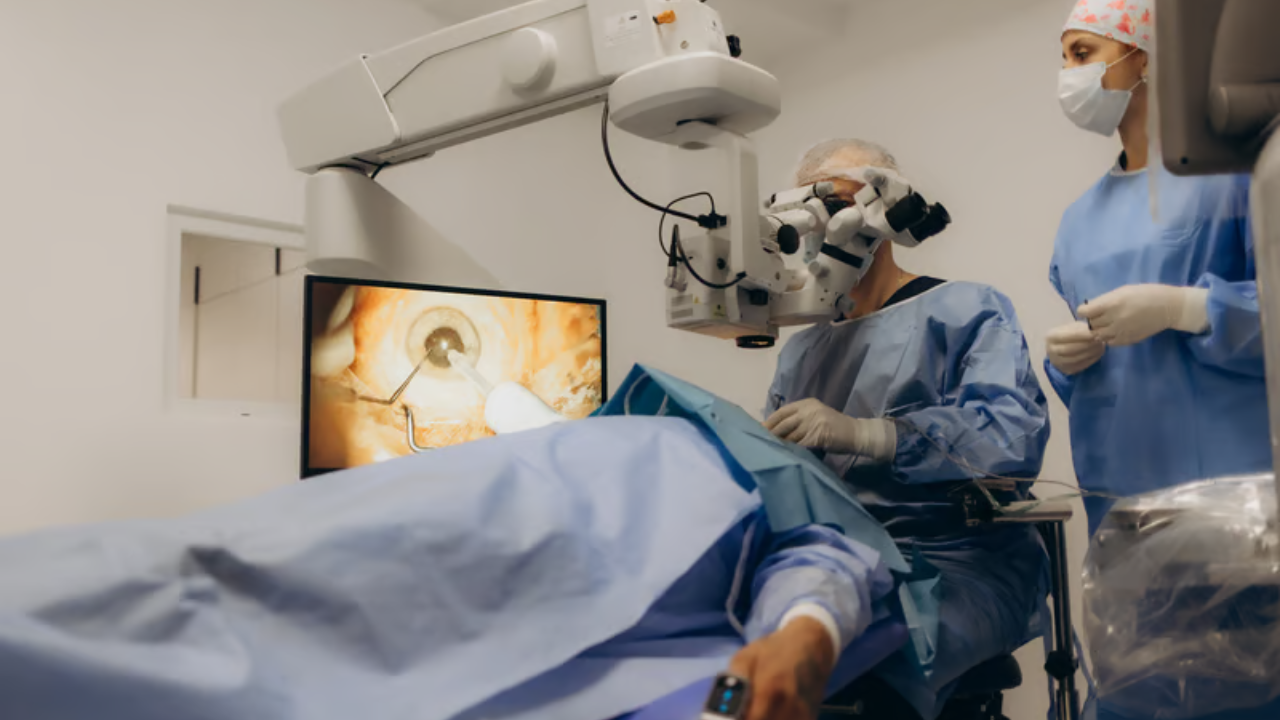
Factors associated with the risk of corneal ectasia after refractive surgery include a thin cornea, a high eyeglass prescription, abnormalities on topography or tomography, a low residual stromal bed, and a high percentage of altered tissue. A review of risk factors in refractive surgery explains that the percentage of altered tissue may provide a more individualized assessment than a single thickness measurement because it relates the original tissue to the amount that is modified.
Ectasia is a progressive weakening in which the cornea may thin and bulge outward. It is an uncommon but potentially serious complication. A systematic review of ectasia after refractive surgery found that published cases have been associated with procedures such as PRK, LASIK, and SMILE, and that preoperative and surgical factors should be analyzed together.
This does not mean that a specific measurement automatically determines whether surgery is safe or unsafe. Thresholds may vary depending on the technique, equipment, eyeglass prescription, and clinical context. The results should be explained using data from the examination of each eye.
Important questions to ask before agreeing to surgery
If you have been told that you have a thin cornea and are considering refractive surgery, these questions may help you understand the decision:
- •What is the thickness of each cornea, and where is the thinnest point?
- •Is the corneal shape regular on topography and tomography?
- •Is there evidence suggesting keratoconus, a susceptible cornea, or another ectatic disease?
- •How much tissue would be removed with the proposed technique?
- •How much tissue would remain after surgery, and how was that calculated?
- •What role do my eyeglass prescription, age, astigmatism, and pupil size play?
- •Do I have dry eye or another condition that could increase the risks?
- •What visual risks are relevant in my case, such as halos, glare, blurred vision, or reduced contrast?
- •How likely is it that I will still need glasses after the procedure?
- •If I am not a candidate for this technique, what alternatives are reasonable, and what are their own limitations?
- •Would a second opinion from a specialist who directly reviews my test results be helpful?
The FDA LASIK checklist recommends asking specifically about thin corneas, prescription stability, dry eye, limitations of surgery, possible visual symptoms, and the possibility that glasses or additional treatments may still be needed.
What options can be discussed?
For some people, the safest alternative may be not having surgery and continuing to wear eyeglasses or contact lenses, if they are tolerated and appropriate. Deciding not to have surgery is also a valid medical option when testing shows a risk that does not justify the expected benefit.
- •LASIK: What needs to be evaluated: Corneal shape, thickness, the amount of tissue to be removed, and the residual stromal bed. Important limitations: It may not be appropriate for thin corneas, corneal abnormalities, dry eye, or other risk factors.
- •PRK: What needs to be evaluated: The same assessment of corneal shape, thickness, prescription, and tissue. Important limitations: Not creating a flap does not eliminate all risks; recovery and discomfort may be different.
- •SMILE: What needs to be evaluated: Prescription, corneal anatomy, tomography, and the amount of tissue that will be altered. Important limitations: It is not automatically a solution for a thin cornea and has its own indications and limitations.
- •Phakic intraocular lens: What needs to be evaluated: Anterior chamber depth, endothelial cell count, eye size, and the overall health of the anterior segment. Important limitations: This is surgery inside the eye; it may not be feasible and has risks that differ from corneal procedures.
- •Eyeglasses or contact lenses: What needs to be evaluated: Tolerance, visual quality, lifestyle, and ocular surface health. Important limitations: They do not eliminate dependence on vision correction, but they can avoid surgically altering the cornea.
The National Eye Institute recognizes corneal procedures such as PRK and intraocular options such as phakic lenses as alternatives to LASIK. However, each alternative should be evaluated individually: for example, a phakic lens requires specific anatomical conditions and is not free of risks.
When might a second opinion be helpful?
A second opinion may be reasonable when test results differ, the cornea is borderline, there is a family history of keratoconus, the prescription is high, results are unclear, or there is pressure to decide quickly. It is helpful to bring the complete reports and, if possible, the original topography or tomography images—not just a printed conclusion.
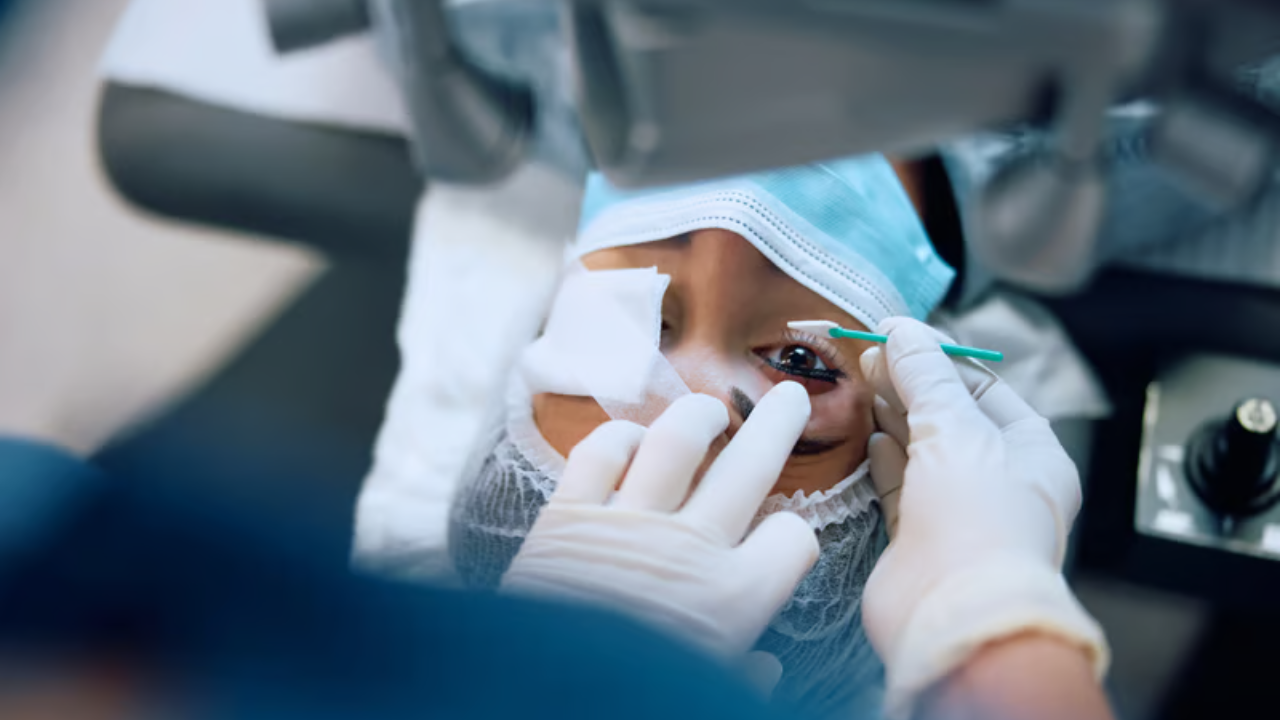
The purpose of a second opinion is not to obtain authorization for surgery, but to confirm how the findings are interpreted, what uncertainties exist, and what alternatives are available. It can also help distinguish between “I am not a candidate for LASIK” and “I am not a candidate for any refractive surgery,” which do not necessarily mean the same thing.
Frequently asked questions
Does a thin cornea mean I can never have surgery?
Not necessarily. Thickness is only one part of the assessment. Corneal shape, prescription, the tissue that would be altered, and the health of the eye can change the recommendation. In some cases, corneal surgery is not recommended; in others, a different alternative may be discussed. You should not assume another technique will be feasible without specific testing.
Is PRK always safer than LASIK when the cornea is thin?
No. PRK avoids creating a flap, but it also removes corneal tissue and may not be appropriate if there are shape abnormalities, a risk of ectasia, or other problems. The comparison should be based on how much tissue would be altered and the findings in each eye, not just the name of the procedure.
If a clinic tells me I’m a candidate, should I agree right away?
No. Ask them to explain the tests, expected benefits, risks, alternatives, and the possibility that you may still need to wear glasses. If the information is contradictory or you don’t understand why a particular procedure was chosen, you can take time to review the informed consent form and consider getting a second opinion.
What to bring to your consultation
The question should not be only “How thin is my cornea?” but also “What is its shape, how much tissue would be altered, how much would remain, and what other factors affect the risk?” A responsible evaluation may conclude that a procedure is reasonable, that further testing is needed, or that the prudent choice is not to have surgery. The recommendation should be based on your test results and vision goals, without promising complete freedom from glasses or guaranteed results.
If you’re considering refractive surgery and have been told you have a thin cornea, you can request an ophthalmology consultation focused on candidacy, testing, and alternatives. A consultation should help you understand your results and make a decision without pressure. You can also take your test results for an independent second opinion whenever you feel it’s necessary.
If you’d like an individual assessment, you can request information through WhatsApp.
References
- •National Eye Institute: Surgery for Refractive Errors. Update consulted: December 2024.
- •
- •
- •
- •Santhiago et al. Ectasia risk factors in refractive surgery. Clinical Ophthalmology, 2016.
- •Moshirfar et al. Ectasia After Corneal Refractive Surgery: A Systematic Review. Ophthalmology and Therapy, 2021.
- •
This content is for informational purposes and does not replace a medical consultation or constitute a diagnosis.
This information is for guidance only and does not replace a medical consultation, diagnosis, or treatment. Each case is assessed in person.


